Lights, (Camera, Action)

This blog post is something I am really excited to share with you! For me, live music has always been the only thing that has made sense. Recently, as I am gearing up for graduation, I came to the realization that I wasn’t exactly sure what route I wanted to take in the music business industry.

In a way, this was an almost freeing realization for me. I allowed myself to explore some options that had never crossed my mind before. The past few months, every time I go to a show I have been trying to pick a new thing to observe how it affects the concert. Most recently, I have been fixated on lights and how they impact the show.

Most recently, I made a trek down to Phoenix, Arizona and made a point to reach out to the lighting operator at the show for the 8123 Fest and see if I could get some advice and an inside look as to his role in the industry. I really hope you enjoy learning about Jonathan’s story and advice as much as I did!

  1. How did you get into the lighting design field of music business?

When I started high school, I didn’t really know what I wanted to do with my time. I was too late for football, and student council wasn’t really my thing. But for some reason technical theater caught my eye. So I ran the lights for every production that want on in the auditorium from my freshman year till my senior year. But I knew once I graduated I didn’t want to do actual theater anymore so there was only one option for jobs to go to and I requested an internship at one of the local companies. We did concerts, festivals, corporate events, and touring. And now the rest is history.

2. What was your formal training like?

To be honest, there wasn’t really any. A lot of my training was self-taught and lots of watching and learning. The more time behind a console and the more personal time put into it the better I got. The more exploring around a console and trying new effects is the best way to learn.

3. Do you have any musical background? If so, how does that impact your job as a lighting technician?

I have played drums since high school and that has helped a lot with knowing timing. Knowing how to pick out the best BPM of a song and keeping tempo with the lights is what makes for a great show. But it also has helped with other instruments. The best tempo is not always in the drums, but could be in the bass or guitar. If the band has it, even a piano. Definitely being musically inclined has helped do what I do.

4. What does your day-to-day life look like on tour?

Depends on the day. Every day, regardless, I make sure to start with breakfast and find a bathroom with plumbing. (Fun fact: you can only go number 1 on a bus) If its’ a show day I’ll always try and get into the venue before load in. Scope it out, meet the stage manager, house lighting, and the hands. Give them a run down on the light rig and how many hands will work with me and how many will help with backline and audio. From there we work as efficiently as possible to get the rig up so I can touch up positions and programming. Between then and show time it’s usually chill time, whether it’s in the green room or bus and finding dinner at some point if the venue doesn’t provide catering. From there, do the show, load out as efficiently as possible, and one the trailer shuts, its either bed time or hang time depending when bus call is. On days off, typically there will be a hotel involved. Get a shower or 2 in that day, laundry if needed, and just relax and enjoy the day. If it’s in a good city then some exploring would probably be on the agenda also.

5. How do you manage your personal and work life?

It’s not easy. When I go on tour I typically shut all the power off in my house, and my dog goes to my mom’s house to be watched if she is able to. When I was in a relationship, saying see ya later to her was hard in a sense also but now being single its nothing to worry about. Once I’m on tour, personal life goes out the door in a sense for me. When I get home I’ll take a few recoup days and will go to my part time job. Being home and planning the next tour takes some scheduling for me. I have lots of things to take care of at home so planning a couple nights a week to plan, design, program a tour is a must and could consist of late nights if needed.

6. Are you at all concerned with the preservation or longevity of the live music industry?

Yes and no. There will always be new artists, there will always be tours, the thing to worry about is to make sure genres don’t die. If certain genres go away and those bands don’t tour anymore then it leaves people to not buy tickets anymore because they won’t want to go to genres they aren’t familiar with. Also if there’s certain venues that depend on a certain genre to stay open then they could possibly close also. That’s just my opinion and there could be similar or opposite opinions out there.

7. How do you determine what acts you want to work for on tour?

Typically, if a new client comes my way and they seem like cool people then I’ll give them a chance. After the first tour it’s always the fact of thinking if they were cool to work with, was the pay where I want it, and then there’s always the people that will only do it if the tour is on a bus. Typically, the majority of the time having lighting on a tour will require a bus. And then the decision comes when the next tour comes around if I go or stay home. The big one is making sure you get along with everyone else. Because on tour, it’s a big family. We help each other, take care of each other, and live together. So if there were any kinds of issues then its either don’t go or fix them so you get back out there. 

8. What is the greatest struggle you have had to overcome to get to where you are now?

Actually finding bands to work with. I’m going to make these odds up right now but there are probably 12 lighting operators to 1 band ratio. And those odds are most likely way higher. Basically, you just have to make sure you keep in practice with your work so your shows always look fresh and organized and skilled. If you’re good at what you do, then the phone will ring. So just getting a start and making a name for yourself is the hardest part. And it’s not always about how good of a programmer or operator you are, but how you handle yourself. You could be the best programmer in the world but if you have a bad attitude all the time, or your hygiene is terrible then no one will want to work with you.

9. As technology continues to progress, do you think your job roles will alter? How so?

As a role, probably not. I think there will always be a spot for lighting operators, and then there will always be lighting programmers regardless if its programming to be ran live or for a midi show. As technology grows, our skills will get better and we will continue to learn. And even for midi shows, there will still need to be people to set up the gear and someone to touch up the positions and tie in house rigs.

10. Working in lights, are there any other tasks that you perform that someone might not automatically assume?

I guess that depends on the person. A lot of people only see me behind the console. But in that days’ work I also help unload the trailer, work with the local stagehands to get whatever light structure setup on the stage and then tear it down at the end of the night. Before the tour I’m spending anywhere from 1-3 weeks of programming. But it also depends on the size of a tour also. In a House of Blues/Van Buren/Marquee Theater type tour that is my role. But it can vary on arena and pavilion tours which I hope to experience as a headliner sooner than later. I have been on an arena tour as direct support before and front what I gathered, the lighting operator was the programmer and operator, but someone else designed the rig, and there was a group of guys from the lighting company that set it up and tore it down every show day. So there’s all different types of lighting designers out there on their job roles.

11. What is the strongest personality trait someone can have looking to enter the music industry?

Being open minded! You will definitely get turned downed you will have your success’. If you get turned down and let that bother you then there’s most likely opportunities that could be missed. Also use that to be different in the programming style. Don’t be afraid to try something new or spend time to discover something. But if there are others to name off its optimism, hardworking, sense of humor, and being a leader.

12. What is one piece of advice you wish someone would have told you before you started working in your current position?

To be honest I have sat here for an hour thinking of an answer for this and I don’t think I have one. I came into this field with an open mind and took everything as it came. If there was something I was surprised about, I dealt with it as needed and didn’t ask questions. I have been told I have a very adult demeanor for my age and I tend to keep that going. I ask questions when necessary and think before I speak. Not sure if this was a good answer for the question but here it is. haha

New Year, New Knowledge

Hello all and welcome back to my blog! 

I know I’ve been gone for quite some time but I am so excited to start working again as I begin my final semester in college! As life got busy, I unfortunately took an extended leave from this website. As I look forward to graduation in May I find myself craving to know as much as I can about the career field I am about to enter. This will include information about jobs, personal interviews, research about the flute to assist in my recital, and all the badass music women I can find. 

So buckle up folks and enjoy learning about my first badass woman of 2019! 

How did you form WoodWired and was your initial goal to be primarily under the electronic genre?

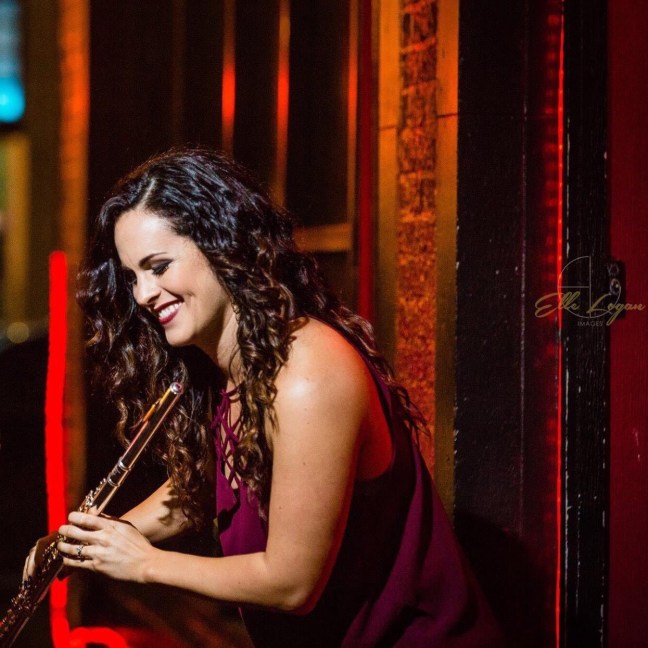
To get the new year started off right, I would like to share this interview I had with Dr. Hannah Leffler. Dr. Leffler is a flautist in the electronic duo, WoodWired. She performs with electronics just as much as she performs in the traditional setting and I was dying to learn more about her business strategies for the group as well some her strategies for electronic performance. This was especially interesting to me as my senior recital will include primarily flute and electronic pieces.

            WoodWired formed after Cheyenne and I had played in a competitive woodwind quintet together while getting our doctorates. She finished her degree and wasn’t able to be in the quintet anymore, and we really wanted to keep playing together.  I definitely had never pictured myself in an electronic music group! However, I had always been on the lookout for a unique chamber group in which to participate, so when Cheyenne presented the idea, I was all for it! We started just trying to do a cool looping arrangement for one of my doctoral recitals and then realized how much potential there was.

How has your classical training helped you both inside your duo and in your individual adventures?

            I have a deep love for both classical music and the fusion music that WoodWired primarily performs. The level of detail and consistency required in classical performance trained me so well for looping music. My training also gave me an understanding of music theory, which helps tremendously with composing and arranging. I still really enjoy performing solo, chamber, and orchestral classical music. Even though the music is written out, there is spontaneity of feeling and emotion that comes with it, and I love it. Playing classical music also trained me to think on my feet and remain calm if things go wrong, which happens all the time with electronic music! The adjustments that have to be made are different when working with a computer, but the aspect of multi-tasking mentally is the same. Honestly, these benefits go both ways. Classical training gave me these skills, but electronic music has also made me a stronger, more consistent classical player. 

When you and Cheyenne are on tours, what does your day-to-day timeline look like?

            During tours, we stay pretty busy. We usually find driving easier because of all our equipment. Because of the nature of our group, we have to plan extra time for setup and sound checks in the hall before each event. We will usually arrive early, set up, and check levels for everything. If possible, we will try to schedule this close enough to the performance to leave our equipment set up. However, we often have to tear down, clear the hall, and then give our respective master classes, lectures, workshops, etc. After evening concerts, we then tear down again, take our equipment to where we are staying, and get up early to drive to our next stop. By the time we have driven a few hours, unloaded into the venue, sound checked, taught master classes, performed, repacked the car, and unloaded into our hotel, we are usually pretty exhausted! We used to schedule events for every day, but after our first few tours, we learned how physically and mentally exhausting it was, especially with all of the equipment! We now will make sure we have at least one full day in the middle with nothing planned so that we keep our energy up. 

What were some of the challenges in recording your electronic album that strictly acoustic recordings wouldn’t have to deal with?

            It was very tricky! We had to decide whether we wanted to record the album like a pop record (record each loop and solo individually and then have the producer piece them together) or whether we wanted to try and keep it as close to a live performance as possible. We opted to use the latter so that we kept the energy and momentum of the pieces. However, because we had to be next to each other in the sound booth, live and loop levels were difficult. Attempting to balance the loop tracks with what we were playing live took many hours of work on our producer Dan Cavanaugh’s part! He was patient and did a great job, though, and we were pleased with the result.

When did you discover your passion for electronic music and what were some of the most crucial steps you took into making it part of your career?

            Honestly, WoodWired is when I truly became passionate about electronic music. I had some experience in it, but only a small amount. It was when Cheyenne introduced me to Michael Lowenstern’s music, and I started playing around with all of the software possibilities that I became truly enamored. The most important thing I did was experiment! We had some really bad ideas in the beginning, but every failed piece has resulted in some new piece of knowledge that we have used for later pieces. To put it more succinctly, listening to many styles of music and being brave about trying new things were the most beneficial things for me. I am a big believer in trying new things, so I took jazz improv classes, talked to audio engineers, did a ton of research, and just threw myself into uncomfortable, intimidating situations to learn new things. 

Between yourself and Cheyenne, how do the two of you break up your job delegations in order to make WoodWired successful?

            This is a tough question, because we both honestly participate in every aspect of it. Sometimes, one of us is busier than the other, so the person with more time will take on more of the workload. We both have complete veto power, so we’ll throw out ideas and plans and see what the other one thinks. However, as a general rule, Cheyenne is wildly creative and has no end of ideas for pieces and projects. She can get on a creative streak and write a piece in two days. I am more of the detail-oriented, organized one, so I try to keep us on track with goals, scheduling, rehearsing, and editing of pieces. We have both written original material and arrangements, but she tends to do more of the composing, and I tend to do more of our arrangements. 

            It takes a large amount of trust to work together so closely. At this point, we probably know each other better than anyone else on earth!  We have to be able to be honest with each other, hard on each other when we know something can be better, and willing to entertain each other’s ideas. For me, I have to be open-minded about her creative ideas that I think are crazy, and she has to be willing to let me say, “No, we can’t write a new piece right now. We have 100 emails to answer, a program to make, and a performance coming up.” It is a constant ebb and flow, and it works well for us. 

Photo Courtesy of Elle Logan Photography and Hannah Leffler

A Day in the Life

As I sit here reflecting on my second year at Adams State, I can’t say enough about how lucky I have been. I’m surrounded by nothing but support as I’ve started job and internship searches and my professors have been absolutely incredible in helping hone my skills. A few weeks ago I was fortunate enough to get in contact with Byron Vall, the general manager at a venue I was going to see some shows at. He was kind enough to let me shadow him and his crew for the two days I was in Denver and I cannot put into words how grateful I feel. The crew was incredible and I learned so much in those two short days. Byron also agreed to let me interview him via email so I could pick his brain some more about exactly what it is that he does!

Byron was kind enough to show me what his show day schedule looks like and even let me look at some templates for the paperwork he does for every show. Honestly, this was one of the most interesting insights I’ve been able to get because I was able to figure out what I need to start researching now in order to be ahead. I was also able to work and talk with the stagehands, security crew, and front of house engineers on both nights and couldn’t believe how different those days were. It was really cool to be able to experience this first-hand and get an inside look at the field I am dying to go into! I’m so grateful for the memories made and experiences gained on this trip. Once again, I was reminded of my passion for live music.

How did you first discover your passion for live music?

I began playing piano at a very young age, and performed throughout this. Once in high school I picked up a guitar and joined jazz band. From there I started playing in bands. It’s a pretty typical pathway, ha. But reality is I started playing music before I got into shows. Once I started playing music similar to what I listened to (jazz / rock vs. the classical that I played on piano) and could see those artists live, I grabbed ahold of it and started attending concerts very regularly.

What was your inspiration or motivation to go into the management area of music business?

Funny story actually. I began college as a performance major. After a few months decided that I should do something that has to do with business because I didn’t believe there was much that I could do with a performance degree, as I was no maestro. I started taking marketing and business classes and really enjoyed it. The reality was I knew I needed to do something business related so I could find work easier and not be stuck without a job.

Working your way up to your current position was no easy feat, I’m sure. Would you be able to explain briefly how you became the General Manager for The Summit Music Hall?

This story is hardly brief, but essentially I started as a Marketing intern at a 250 capacity venue called Larimer Lounge. They then hired me as their ‘door guy.’ Once I graduated they hired me as their ‘marketing director’ and then I started managing the venue as well. After a couple years in that position, I had begun to look elsewhere for work and had a friend who was interning here at Soda Jerk Presents. I sent in my resume and had a conversation with the owner. I thought nothing was coming out of it until about 6 months later I got a call to interview. I started at Marquis Theater as GM in March of 2012. After 4 years at Marquis, there was some restructuring at Summit Music Hall, and I was asked to come over and manage Summit! That’s about as short as I can make it! Ha! 

What has been the greatest struggle you have had to overcome working your way to your position?

Being patient is super important. Positions that aren’t part time or entry level are very scarce in the music business, at least in my experience. And it may take a lot of ‘paying your dues’ at various levels to get where you want to go. So I guess I would say my greatest struggle is to keep my eyes on the prize, work hard, and patiently wait for things to open up or go my way. 

What is one piece of advice you wish someone would have told you before you got into your current position?

So many different scenarios can pop up within venue management. Learning how to adapt and effectively deal with conflict goes a long way, and people will respect that.

Are you at all concerned with the preservation or longevity of the live music industry?

I’m intrigued to see where it goes from here. There are always more artists, more venues, and more revenue streams being tried out. But as of now, I see this is one of the only reliable revenue streams for the music industry for agents, artists, and venues. So I don’t necessarily see it slowing down as a whole. Although I AM very concerned with the corporate takeover of the industry. 

I know we talked briefly about how your performance background has helped you in your line of work, would you mind elaborating on any of these benefits?

Well if I get frustrated or burned out, it’s easy for me to sit down at my piano and remind myself that I love music at the base level, and that’s why I got into this business. So that’s a plus.  There are also situations where I’ll know how gear works, or what it’s like to be stressed out at a show, or geek out over gear with people on tour. I guess a good benefit is that it allows me to connect better with artists and relate to people who I’m working with during each show.

As technology continues to progress, do you think your job roles will alter? How so?

As far as my day to day business goes, I think programs will develop and make my job easier when it comes to the accounting side, or alcohol inventory side, the menial tasks, etc. I don’t really see it changing running or advancing shows that much in the near future, though.

What are your favorite/least favorite aspects of venue management?

I used to think my favorite thing would be the shows. That is a great plus, seeing tons of music. But what I realized my favorite aspect is working with, getting to know, and befriending a lot of people in a similar boat as me with the same passions. There are a lot of people in the industry who aren’t necessarily genuinely in it for the right reasons. I really enjoy meeting other people who are fun to work with and enjoy what they do. You can tell who is in it because they love it almost immediately, and they tend to be great humans.

My least favorite aspect of the shows is probably dealing with the after effects of hard partiers. Cleaning up broken stuff, puke, messes, fights, etc. I have security and they typically handle everything, but it still is kind of a bummer to see people over party and make fools of themselves. Especially because everyone is there because they have one thing in common, that they love that artist. I hate it when people decide to ruin that sense of community by fighting or whatever the issue is.

As a manager, are there any other tasks that you perform that someone might automatically not assume?

Oh boy. I like to be a ‘hands on’ type manager. This means I’ll help out in any way possible. Cleaning up puke, plunging toilets, helping security with rowdy crowds/ patrons. Those are just a few of those types of things. There’s so much, like painting graffiti, or fixing holes in walls or leaks. At the smaller venues, I would patch drywall, do electrical work, or consider myself a plumber. You kind of have to be able to do whatever it takes to keep the shows going.

What is the strongest personality trait someone can have looking to enter the artist management field?

Be friendly and modest! It’s incredible how much easier things are and how well people react when you show up smiling. Plus, you’ll have more fun, which is what it’s all about. This experience had the most perfect timing as I’m wrapping up my sophomore year. Not only did I learn an immense amount about

IMG_7450

This experience had the most perfect timing as I’m wrapping up my sophomore year. Not only did I learn an immense amount about the day-to-day production of live music, I also learned what I need to work on in my next two years before graduation. I will be spending more time researching settlements and split points as well as working on quicker adaptation skills. As I work on making myself the most valuable employee candidate, I can’t help but think about how beneficial this experience will be as I venture on to my last two years of schooling. Again, I am so thankful to Byron and everyone at Summit Music Hall for this incredible opportunity!

Inspiration Strikes

This past week has made my heart so incredibly full. My ears have been swimming in beautiful melodies and kind words while my days have been spent surrounded by some of the most genuine people I have ever met. It has been such a long time since I have been inspired to write about my experiences and while I do have some blog plans in the works, I felt compelled to share these experiences. I have struggled with putting my feelings into words before and I feel as though this blog will definitely feature some of this. Please bear with me because I promise the content is worth this struggle.

My university’s music department had the privilege of working with Madera Wind Quintet last week through a variety of activities. I listened to rehearsals, masterclasses, and concerts. The Adams State University’s Winds and Percussion Ensemble even had the pleasure of recording a piece with them. Most importantly, I observed and remembered. I was able to watch and listen to their passion for music and was instantly reminded as to why I want to go into the music industry. Musicians are humans who ooze with passion and this group was no different. Anyone within close proximity could their passion for performing and teaching. They treated not only each other with the utmost respect but everyone they came in contact with last week. And this environment, the one of safety and passion, is one I crave to be a part of the rest of my life.

Instead of going over every detail of the week, and believe me I could, I’m going to try and condense it down into just a few impactful ideas I picked up through listening and watching these incredible human beings. These ideas are ones that should not only be implemented or thought about in the practice rooms, they are relevant in everything we do as humans.

  1. Be respectful. This seems so simple and I think that is why we sometimes can forget about it. I was fortunate enough to watch one of their rehearsals and it was so incredible how they made five voices and opinions all have the same level of importance. Everyone’s ideas were heard and even differences could be dealt with because of the respect they hold for each other. As I listened to their podcasts and talks with students they reiterated this idea but on a much broader sense. The world is a really small place and you never know how things will come back around so it’s vital that you are nice to everyone you come in contact with.
  2. Teach from experience. I think too often we look at professional musicians as if they are immune to mistakes and while they may be less prone to them, they’re just like us. The struggles we deal with every day as musicians are ones they have already gone through. As I performed multiple times for masterclasses last week, I was blown away at how advice was delivered. We were not belittled for mistakes but were guided toward successful practice strategies on how to prevent these mistakes in the future. After playing as a group for years, and playing their instruments even longer, they filled with my brain with so many ideas on how to just be better, and for that, I am so grateful.
  3. Human characteristics are exactly what makes music so great. This is my favorite thing to write about and by far the one I struggle with the most. Listening to them was spectacular beyond words and it wasn’t because they were flawless. It was because they conveyed what the music was trying to portray. As musicians, it is our job to feel what the composer wants us to tell the audience and then commit to communicating it to them. Madera did exactly this and watching them and feeling their music was one of the most inspiring aspects of the week. Music, as I was reminded this week, is one of the purest forms of experiencing emotions and all of our unique quirks help us portray these feelings. I’m so grateful to have had an experience that made me want to be a better musician and better person all within the span of four days.

So, to cap this all off, I want to say a huge “Thank You” to Madera for spending their week with us. For blessing us with their music and their knowledge. Most importantly, thank you for sparking that fire that’s been missing for far too long in my life.

img_4998img_4999

This Is Why I Do It

I remember when I finally decided what it was that I wanted to do. Music Business. It had a nice ring to it. However, it was a ring with a lot of questions attached. One I get frequently regards why I want to go into this field. Especially for people who aren’t in the music spectrum, it can be hard to understand. I also respect the confusion, because  I can’t fathom ever wanting to go into nursing or history. However, I figure I could try to shed some light on the way my mind works.

First off, please try to understand that feelings are extremely hard to put into words and I may come up short a few times throughout the rest of this blogs.

I was twelve years old when I went to my first concert. It was an arena packed with preteens all screaming for our favorite boy band, the Jonas Brothers. While this was a special experience, it wasn’t until I went to my first standing-room-only show that I appreciated how powerful live music was. I just turned thirteen and my favorite band, The Maine, was on the sage in front of me. I have since seen them live eight times, and look forward to the next time I am able to see them. It was because of that show that I wanted to be in music, specifically live music, forever.

In one of my previous blogs, I mentioned my daily struggle with being a perfectionist. Attached to this, I often deal with intense bouts of anxiety and until a few months ago I didn’t really know how to deal with it. During my senior year,the most stressful time of my life, my anxiety was at an all time high and I was struggling to even maintain my closest of friendships. It was at that point a long distance friend recommended listening to twenty one pilots, because many of their songs deal with overcoming insecurities and dealing with our individual demons. Needless to say, they had a huge impact on my life and I have never related so closely to lyrics before in my life. It was a hugely important find in my life because they helped remind me that I was not alone in these feelings and gave me yet another sanctuary in music.

So there’s some backstory and sentimental value. Basically, I’ve always thought concerts were rad.

I went to their show this past week and it really inspired me all over again. And here is the part where I try to put into words what I felt that night. Warning: cliche feelings ahead.

I was with my two best friends, one of them was actually who recommended listening to twenty one pilots almost two years ago. They flew down to Colorado from Washington and we stocked up on sunscreen and snacks and camped outside the venue for nine hours before the doors opened. We danced and laughed through the first two acts, despite the extremely inebriated couple behind us. Then we waited. It wasn’t until they started setting up the stage that it even began to feel real. Once the fog started, it became very real to me and the other 9,799 fans in the amphitheater and the screams began to fill the air. We were all about to see our idols. In front of us. Singing our favorite songs. We’ve waiting months for this moment and it was finally there.

You look around and you see everyone just as excited as you are. We will all be connected by this night and this band. In this setting, no one cares about how you dress, or your job, because it’s all about the music.

You look around again, this time you see thousands of phone flashlights on, swaying with the beat. When everyone else is looking at the artist, look around and see a new kind of light. This one is within all of the fan’s eyes. It’s there because having these words sung to you in person is something that will take your heart captive.

Just once more, look around, but this time focus your attention on the performers. Realize they are people and all of the hard work they’ve been putting in is paying off. They have that same light in their eyes and you can’t even fathom how happy they must feel to have you in the crowd, singing their words.

But hands down, my favorite thing about concerts is a special moment, and a moment I live for. When you and thousand s of other concert-goers are singing the same words at the top of your lungs you take over. Suddenly, the voice of thousands is beating out the sound system and you are no longer about to hear the singer, just the crowd. That’s what I live for.

These moments, the pure bliss you are presented with at events like this. That’s why I want to do it. I want to help others find their sanctuary because I know how badly I needed mine.

And That’s a Wrap…

This last week has been yet another hectic one, but it offered a great deal of experiences. Our Topics in Music Business class put on the concert we have been helping set up for the past few months and the Percussion Extravaganza took place last night. Many of my previous blogs have been written with the newly found advice I gained through working on this concert. The day of events were no different and having the opportunity to actually work with the artists gave me an even more detailed look at everything that goes into these shows. My work with the percussion studio is minor, but it always offer an interesting perspective on all that goes into putting on a show. This week’s tips come from what I picked up at both concerts this week!
1. Test Everything – There’s the obvious things that you should test before a show like your microphones and your amps. However, if you are working with more than just sound, there is more that you need to test. Test the video you are playing with, as well as the cameras you are recording with. Finally, and probably most importantly, if you are live streaming your event, test it! Even better, test it before the day of to ensure everything is working the way you want!
2. Promote – In order to get the large crowd or even the sell out crowd, a lot needs to be done. The class started promoting about three weeks before our show and we sold out about four days before the show. On the other hand, the percussion studio started promoting about week before our show and while we still had a really large turnout, we could have had more.
3. Invest Yourself – This is a topic we have been talking about in our class quite a bit and it really resonated with me. As a representative of someone else’s love and soul, you need to invest yourself in it as if it was your own heart and soul. It’s easier for people to relate if you are being genuine and you care passionately about what it is that you’re selling. On Friday night, I watched artist perform so passionately on stage and then come off stage and interact with fans in such a caring way that made them want to buy their product. If you can invest in whatever it is that you’re doing, you’re job is going to become ten times easier.
Woman of the Week:
I choose Julie this week because her job is a very unique aspect of the music business. Currently, she is the lead music booker for The Tonight Show Starting Jimmy Fallon and has worked many jobs similar to this prior to her position with with Jimmy Fallon’s show. Before she started working there, Julie worked with Today and booked their summer concert series with a record number of performers for 2014. She has also worked as a talent finder for Ellen before she started working with Today. Personally,  I think working for a talent agency and looking for acts of all kinds has the possibility to be overwhelming. That being said,  I’m really intrigued at the idea of working for a single entity and having the acts come to you and overseeing that entire process and that side of the music business. Julie has done a lot for artists and worked very closely with a different side of the business I had never really considered before and that’s why I chose to focus on her this week!
Until next week,
Emily

Perfecting the Perfectionist

As a musician, it’s no secret  that most of struggle with being a perfectionist. While this may sound like a good thing, it does actually come with many unique struggles. I’m going to use my story, since it’s the one I’m most familiar with, to give an inside look into what I currently do to help when things get tough. I am in no way an expert in dealing with the anxiety and other symptoms that often accompany our perfection tendencies. However, I do have a lot experience in exploring different techniques to help combat these negative side effects. Essentially, I have spent the better part of my nineteen years perfecting my perfectionist and while not everything is going to work for you, you have a whole life time to perfect your inner perfectionist, too!
As far as my story goes, it’s as simple as constantly fighting the fear of disappointing people close to me. I’ve always done really well in school, and the thought of anything less than perfect constantly scares me into long nights of studying and early mornings cramming as much information down my throat as I can. When it comes to musicianship, I push myself every week to make sure I am making the best progress possible. Most of my anxieties in the music hit me the hardest when it comes to performing. Ever since I began performing soloistically, my performance anxiety has been crippling. I don’t think there has been a performance where I haven’t cried in anticipation of stepping on stage. I’ve never liked the idea of other people judging my playing and my playing alone because I felt I would never live up to expectations people have set for me.
I’m here to tell you, you’re not alone in fighting with the struggles attached to being a perfectionist. I’m also here to give you some tips on efficient ways to deal with those struggles.
1. Take a break – Sometimes you just work better after a break, whether it’s from studying or practicing. If you get frustrated, you aren’t going to be able to accomplish anything. Take that break, even if its just for a few minutes to clear your mind. In all honesty, if I get really upset at something I am not able to get in the practice room, I am willing to try and take up to a full day off because my brain cannot handle working under the frustration usually attached to the practice stresses.
2. Get an audience – Let’s be honest, this is going to be the hardest thing to actually do just because it goes against everything we want to do. At the beginning of my first semester of flute lessons, I was in full-blown panic mode and my professor told me to perform in front of someone every day until my recital. If you end up doing this, and I highly recommend that you do, make those experiences meaningful. Grab people who are going to give you more to work with than just, “yeah, you sound good.” In reality, you’re probably going to be so terrified the first times you do this you won’t even sound that good. Don’t worry, the more you do this, the better you will sound! I promise!
3. Accept Reality – There is no such thing as a perfect performance or perfect grade. We’re humans and we mess up and that’s okay. It keeps life exciting and we should always strive to learn something from those mistakes. Keep yourself surrounded by the right people because they have no set expectation for us. The fear we have of disappointing of them is usually something we’ve conjured up in our head to justify our irrational fear of letting someone down. Understand and accept that perfection doesn’t exist, but never stop chasing down the idea of progress. If you’re pushing yourself to be the best you possibly you can be, you’ll never be disappointed.
Woman of the Week:
Tamara Hrivnak recently joined Google Play and YouTube as the Director of Music Partnerships. She received her Master’s Degree from Queens University in Political Sciences and her Doctorate from University of Toronto in Law. While neither of her degrees were in music, most of her very successful career has been spent in the music industry. Before her time with Google Play and YouTube, Tamara spent almost ten years working in multiple positions for Warner Music Group. She has also had a few jobs working in various fields of technology before she got into the music business. Currently, her job at Google Play and YouTube has Tamara in charge of  licensing strategy and business development with major record labels and music publishers and oversees current and potential partnerships in music for Google Play. Tamara’s education and work in law are what inspire me the most. She is no doubt another inspiring woman giving the next generation of music business women someone to look up to.
Until next week,
Emily

Revival of Vinyl

Hello all!
This week’s blog is going to be on a topic that has interested me for quite some time now and I finally have the opportunity to do some research on it! Vinyl records are back and there is no denying it! I recently read an article on Alternative Press discussing the large increase of sales in the last year. This article inspired me to take a break from my normal advice blog and dive into some research!
About the Revival:
Based on the Alternative Press article, in 2015, sales of record EPs and LPs surpassed the revenue free music streaming sources obtained from advertisements! Sales from last year reached the highest level since 1988 reaching a total of $416 million dollars from records alone. According to Nielsen, 2015 marked the tenth straight year of growth in vinyl sales and stated the biggest contributor to the sales increase were independent record stores. In another article by Nielsen, I discovered that sales of vinyls have grown by roughly 3 million units every year for at least the past three years! Billboard adds to this saying record sales have grown by 260% since 2009! Vinyl has come back with such intensity that the ‘Vinyl Revival’ is an actual page on Wikipedia!
 
Why I Support It:
Last Christmas I took all of my gift money and went to Hastings with my best friend to buy a record player and we spent hours looking at all the new and used records they had to offer! Since then I try and spend a least a day a month where I just listen to my record player for the sole reason of the pure sound it puts out. It is hard for me to put into words the way the sounds come out of the player compared to songs I listen to on my iPod or phone. I think the biggest reason for the purity of the sound is the fact that vinyl has an exact replication of the sound wave in a physical form whereas digital music samples the waves and reconstructs them. Honestly, I really just like the idea of being able to play something like a vinyl and that’s a huge appeal to me! As anything goes in life, it’s a personal decision on whether or not you enjoy listening it. As far as I’m concerned, if you’re listening to music, you’re doing it right!
Woman of the Week
Sticking with the theme of vinyl, I sought to find someone who has a large impact on the Vinyl Revival. After some preliminary research, I found multiple articles about Maggie Derthick, an active member in the music scene in the Detroit area. While not everything company she has worked for has been music based, she has many skills which are similar to those a great artist manager would have! She has been an account manager, a marketing manager and marketing director, and even was the founder for various companies over the last nine years!  One of her biggest and longest ventures has been her work on Girls Gone Vinyl, an entity dedicated to fighting the stigmas of being a female in the DJing field. Every year they put on an all female DJ concert and last year it was 15 hours long and all the profits went to a scholarship Girls Gone Vinyl started to send one artist to Production Classes at the Music Industry Academy, a woman-owned and operated non-profit in the Detroit area. Currently the woman working at Girls Gone Vinyl are working on a film to document all of the struggles and segregation facing a woman in the DJ field. Maggie Derthick is doing so much to change the way woman are looked at in the music industry and I think it’s about time we had more role models like her for our field!
Maggie Derthick
Until next week,
Emily

Shut Up & Share the Music

In an era where everything is fueled by competition, I think music should just stay out of it. I get it, I’m not saying the music industry shouldn’t be competitive, in fact, I’m all about a little competition when it comes to the field. However, what I’m not about is keeping music hidden. In my opinion, there shouldn’t be any reason to keep music all to yourself for the sole reason of not wanting there to be more fans. The best part about music is that it’s a universal language and people all over the world are free to interpret it however they want. If we choose to keep music confined to ourselves, we really are doing a disservice, not only to the band but to other potential fans as well. I recently saw a comment on a YouTube video that captures how I feel about this idea perfectly. In response to someone saying, “I want them to become popular but at the same time I don’t because if they blow up, that means tons of fans :(” a user replied with, “Oh shut up and share the music.” Music is meant to be shared. Plain and simple.

Here are some ideas on how to avoid becoming the first person in the conversation:
1. Pick a friend and share your favorite song with them once a week. Not only will you be looking for new music to show them but they will be giving you something new to listen to.
2. If you’re part of a fan base, don’t be a jerk. Be open to new fans just discovering the music. In the long run, how many shows you’ve been to or how long you’ve been a fan means nothing. What matters is if the music had a positive impact on your life.
3. In addition to purchasing your music on iTunes or something of the sort, I recommend picking a good streaming source. They usually have an option to listen to similar artists and this is one of the best ways to find new music.
Woman of the Week:
I chose Marsha Vlasic because of her impressive history in the artist management industry. Currently, Marsha is is the president of Artist Group International. When she joined the company, she was able to bring all of her clients with her, expanding the already impressive client list at AGI.  She has been in the industry for over 30 years and worked with to ensure the touring careers of Neil Young, Elvis Costello and many, many more were successful. Before her time as president at AGI, she worked for International Creative Management, eventually working her way up to the Vice President of concerts. All of the work she has done over her time in the industry make her the perfect role model for anyone just beginning their journey.
 imgres
Until next week,
Emily

Yes Really is the Answer

These last few weeks have been insanely busy and I’m just now getting a chance reflect on an incredible experience. In a few of my previous posts I’ve mentioned being the ‘yes man’ and how much of a positive impact it can have. As a self-proclaimed ‘yes man’ I can tell you that I’m extraordinarily busy, but I’m also gaining some of the most amazing experience possible.
In collaboration with my professor and my classmate, I spent the last few weeks working on getting our university’s steel band on tour. We only really had to worry about the first day of tour and all of the pre-tour details because the rest was sponsored through Music in the Mountains. While this was a crazy opportunity, I learned a lot and I am looking forward to doing things like this again in the future.
1. Be able to work last minute. Most of the plans didn’t get nailed down until three days before we left and the vehicle confirmations and final itinerary were not finalized or printed off until about 12 hours before we left.
2. Know the itinerary like the back of your hand! If you played any part in getting a show on the road, people are going to ask you. It’s just better for everyone if you know.
3. Have fun. You did all the hard work and now it paying off! You’re on tour and performing for up to 500 people (at least in our case!) at a show!
And As a general guideline for everything –
Dance a little and smile a lot!
Until next time,
Emily
12798127_524720354401999_1475833237_n