
Hello all and welcome back to my blog!
I know I’ve been gone for quite some time but I am so excited to start working again as I begin my final semester in college! As life got busy, I unfortunately took an extended leave from this website. As I look forward to graduation in May I find myself craving to know as much as I can about the career field I am about to enter. This will include information about jobs, personal interviews, research about the flute to assist in my recital, and all the badass music women I can find.
So buckle up folks and enjoy learning about my first badass woman of 2019!
How did you form WoodWired and was your initial goal to be primarily under the electronic genre?
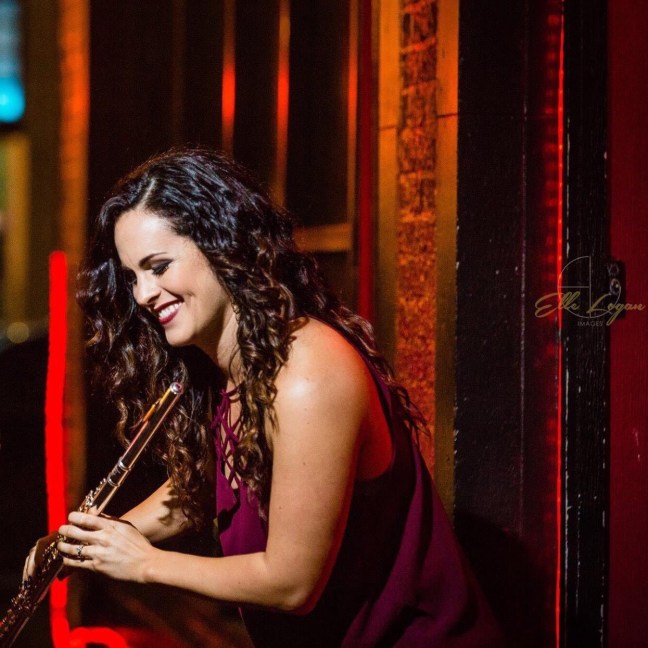
To get the new year started off right, I would like to share this interview I had with Dr. Hannah Leffler. Dr. Leffler is a flautist in the electronic duo, WoodWired. She performs with electronics just as much as she performs in the traditional setting and I was dying to learn more about her business strategies for the group as well some her strategies for electronic performance. This was especially interesting to me as my senior recital will include primarily flute and electronic pieces.
WoodWired formed after Cheyenne and I had played in a competitive woodwind quintet together while getting our doctorates. She finished her degree and wasn’t able to be in the quintet anymore, and we really wanted to keep playing together. I definitely had never pictured myself in an electronic music group! However, I had always been on the lookout for a unique chamber group in which to participate, so when Cheyenne presented the idea, I was all for it! We started just trying to do a cool looping arrangement for one of my doctoral recitals and then realized how much potential there was.
How has your classical training helped you both inside your duo and in your individual adventures?
I have a deep love for both classical music and the fusion music that WoodWired primarily performs. The level of detail and consistency required in classical performance trained me so well for looping music. My training also gave me an understanding of music theory, which helps tremendously with composing and arranging. I still really enjoy performing solo, chamber, and orchestral classical music. Even though the music is written out, there is spontaneity of feeling and emotion that comes with it, and I love it. Playing classical music also trained me to think on my feet and remain calm if things go wrong, which happens all the time with electronic music! The adjustments that have to be made are different when working with a computer, but the aspect of multi-tasking mentally is the same. Honestly, these benefits go both ways. Classical training gave me these skills, but electronic music has also made me a stronger, more consistent classical player.
When you and Cheyenne are on tours, what does your day-to-day timeline look like?
During tours, we stay pretty busy. We usually find driving easier because of all our equipment. Because of the nature of our group, we have to plan extra time for setup and sound checks in the hall before each event. We will usually arrive early, set up, and check levels for everything. If possible, we will try to schedule this close enough to the performance to leave our equipment set up. However, we often have to tear down, clear the hall, and then give our respective master classes, lectures, workshops, etc. After evening concerts, we then tear down again, take our equipment to where we are staying, and get up early to drive to our next stop. By the time we have driven a few hours, unloaded into the venue, sound checked, taught master classes, performed, repacked the car, and unloaded into our hotel, we are usually pretty exhausted! We used to schedule events for every day, but after our first few tours, we learned how physically and mentally exhausting it was, especially with all of the equipment! We now will make sure we have at least one full day in the middle with nothing planned so that we keep our energy up.
What were some of the challenges in recording your electronic album that strictly acoustic recordings wouldn’t have to deal with?
It was very tricky! We had to decide whether we wanted to record the album like a pop record (record each loop and solo individually and then have the producer piece them together) or whether we wanted to try and keep it as close to a live performance as possible. We opted to use the latter so that we kept the energy and momentum of the pieces. However, because we had to be next to each other in the sound booth, live and loop levels were difficult. Attempting to balance the loop tracks with what we were playing live took many hours of work on our producer Dan Cavanaugh’s part! He was patient and did a great job, though, and we were pleased with the result.
When did you discover your passion for electronic music and what were some of the most crucial steps you took into making it part of your career?
Honestly, WoodWired is when I truly became passionate about electronic music. I had some experience in it, but only a small amount. It was when Cheyenne introduced me to Michael Lowenstern’s music, and I started playing around with all of the software possibilities that I became truly enamored. The most important thing I did was experiment! We had some really bad ideas in the beginning, but every failed piece has resulted in some new piece of knowledge that we have used for later pieces. To put it more succinctly, listening to many styles of music and being brave about trying new things were the most beneficial things for me. I am a big believer in trying new things, so I took jazz improv classes, talked to audio engineers, did a ton of research, and just threw myself into uncomfortable, intimidating situations to learn new things.
Between yourself and Cheyenne, how do the two of you break up your job delegations in order to make WoodWired successful?
This is a tough question, because we both honestly participate in every aspect of it. Sometimes, one of us is busier than the other, so the person with more time will take on more of the workload. We both have complete veto power, so we’ll throw out ideas and plans and see what the other one thinks. However, as a general rule, Cheyenne is wildly creative and has no end of ideas for pieces and projects. She can get on a creative streak and write a piece in two days. I am more of the detail-oriented, organized one, so I try to keep us on track with goals, scheduling, rehearsing, and editing of pieces. We have both written original material and arrangements, but she tends to do more of the composing, and I tend to do more of our arrangements.
It takes a large amount of trust to work together so closely. At this point, we probably know each other better than anyone else on earth! We have to be able to be honest with each other, hard on each other when we know something can be better, and willing to entertain each other’s ideas. For me, I have to be open-minded about her creative ideas that I think are crazy, and she has to be willing to let me say, “No, we can’t write a new piece right now. We have 100 emails to answer, a program to make, and a performance coming up.” It is a constant ebb and flow, and it works well for us.
Photo Courtesy of Elle Logan Photography and Hannah Leffler
 Emily K Johnson